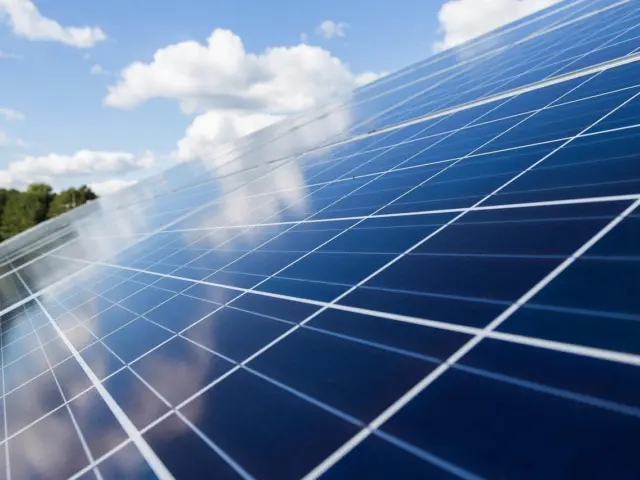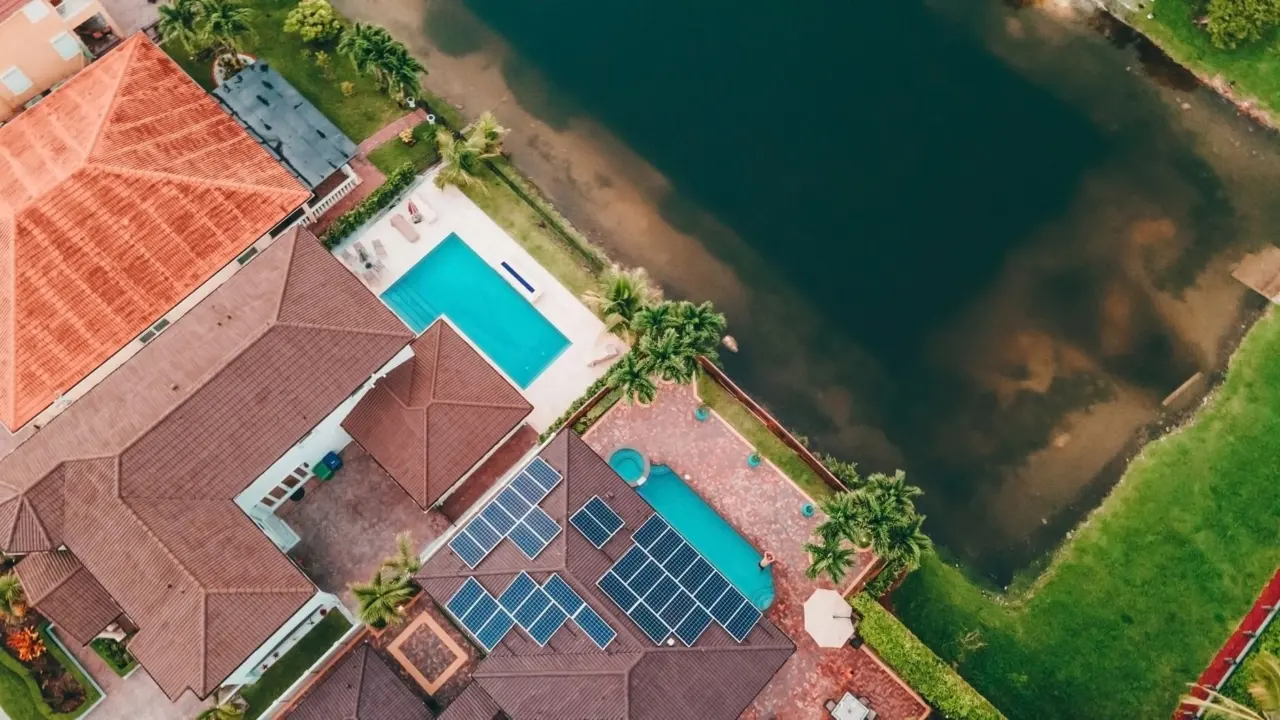
A solar water heater for pool use pumps pool water through sun-warmed collectors and returns it to the pool, with a controller deciding when to run. A properly sized system can raise pool temperature by 10-20 degrees, but only with enough unshaded collector area.
This guide explains the mechanism first, then collector choice, sizing, cost and lifespan. It sits within our wider coverage of renewable energy, where solar heat is one of several household options.
How a solar water heater for pool use works
The system borrows the pool’s existing circulation. According to the International Energy Agency’s Solar Heating and Cooling Programme, a simple unglazed system consists of the pool pump, two temperature sensors, a solar controller and a motorized valve. The stages run in this order:
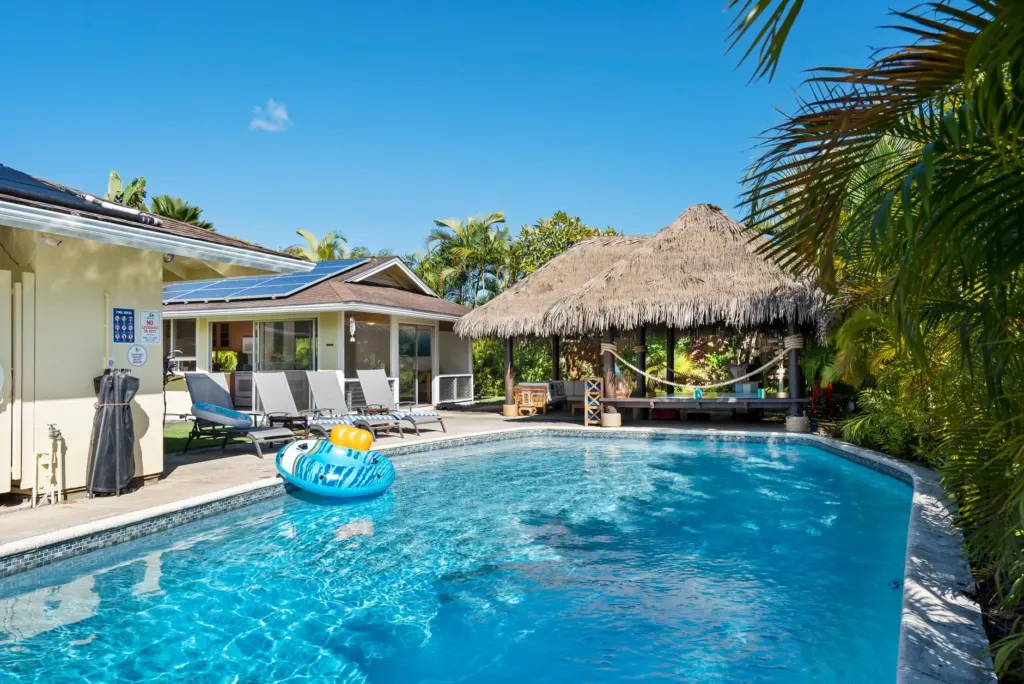
- Pump circulation. The pool pump moves water toward the collectors instead of straight back to the pool.
- Sensor comparison. The two sensors feed readings to the solar controller, which decides whether the collectors are worth running.
- Valve switching. When the controller calls for heat, the motorized valve sends water through the collectors.
- Heat gain. Each pass through the collectors warms the water by only 2-5 degrees, so heating builds up over repeated passes.
- Return to the pool. Warmed water flows back into the pool and mixes with the rest.
That small gain per pass explains why the technology rewards patience. The same IEA programme says a properly sized system can raise the pool temperature by 10-20 degrees. It also says systems can be installed to provide up to 100% of pool heating needs. For a pool owner, this means collector area and sun exposure decide the result more than any single product feature.

Choosing a collector type
The main cost decision is between glazed and unglazed collectors. The IEA programme notes that glazed solar systems often cost several times as much as unglazed ones. It also says collectors that operate only above freezing can be made from lower-cost materials such as thermoplastic rubber or polypropylene.
Unglazed collectors
Unglazed collectors suit pools used in the warm season, when the collectors never face freezing temperatures. They are the budget route and match the simple pump, sensors, controller and valve arrangement described above.
Glazed and flat-plate collectors
Glazed designs, including the flat-plate collector, make sense when the system must work in cooler conditions or beyond the summer season. Their higher price is the trade-off. Flat-plate collectors can usually be oriented within 15 degrees east or west of south, in the northern hemisphere, with little loss in performance. That tolerance gives installers some flexibility on roofs that do not face exactly south.
Sizing collector area and siting it
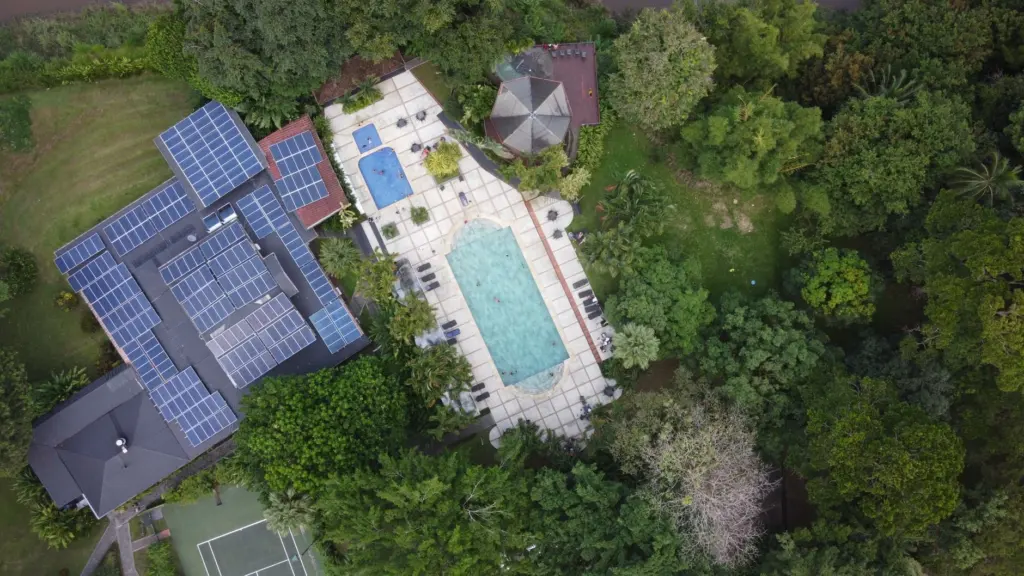
Collector area is the figure that most affects results, yet no single ratio of collector area to pool surface fits every site. The IEA programme says system size depends on available solar insolation, wind factors and the region’s average temperatures. Orientation and angle also matter. A pool in a windy, cooler region needs more collector area than a sheltered one in a hot region, even when the pools are the same size.
Cut heating demand before you buy. The IEA programme points out that reducing your pool heating needs before purchasing a system can allow a smaller one. A smaller system means lower purchase cost and less roof to cover.
| Site factor | Supported value | Planning use |
|---|---|---|
| Sunlight window | Unobstructed sunlight from 8:00 am to 4:00 pm during the heating season | Check shade from trees and buildings across that whole window before requesting quotes. |
| Orientation | Within 15 degrees east or west of south (northern hemisphere) for little performance loss | A roof slightly off true south is usually still workable. |
| Tilt for summer-only heating | Latitude minus 10-15 degrees | Use a flatter angle than your latitude if you only swim in summer. |
| Mounting space | Several hundred square feet of collector area | Confirm roof or ground space exists before choosing a product. |
| Share of heating needs | Up to 100% of pool heating needs | Treat this as a ceiling that needs a well-sited, properly sized system, not a typical result. |
These figures come from the IEA Solar Heating and Cooling Programme’s pool heating guidance.
Shade is the most common reason a good-looking site underperforms. A secondary pool-industry source also notes that shade from trees or nearby structures can reduce performance. If the sunlight window cannot be met, a smaller or alternative arrangement is better than forcing a large array into a poor spot.
Pump, plumbing and installation
The pump is the component owners worry about most, and it rarely needs replacing. The IEA programme says a modern pump, properly sized for filtration and skimmer action, will almost always be adequate for a solar system. If the pump is not large enough, a booster pump has to be added. Ask any installer to confirm which case applies to your pool before quoting for extra equipment.
Installation priorities follow from the mechanism. Keep the collectors in the unobstructed sun window, set the tilt for your swimming season, and make sure the sensors and valve are wired to the controller. A running pump also adds to your power bill, so the electricity price you pay is part of the payback picture. Our guide on How Much Does Electricity Cost Per kWh In 2026? A Practical Guide To Understanding Your Bill – Fixourfuel helps you read that rate. If you are comparing other low-carbon heat sources, how does geothermal energy work covers a different approach.
Cost and temperature gain
Published retail prices show how wide the range is between simple kits and larger installed systems. One retailer lists a universal above-ground solar heater at $180.00, while another advertises solar grid kits from $275.99. A hobbyist’s build-it-yourself solar thermal water heater was estimated at around $200 new for materials. These are starting prices for small or home-built setups. A roof-mounted, professionally installed array costs more, particularly in glazed form.
Vendor temperature claims need caution. The above-ground heater listing claims it can raise pool temperature up to 10 degrees in a week, and says one unit can add 5 degrees in less than two days. Those are the seller’s claims for a single product, not independent results. The IEA’s 10-20 degrees for a properly sized system is the better planning figure. A DIY blog reported a single sunny-day result on a small collector, which shows the effect of strong sun, not what a whole pool will do.
No payback range is stated in the evidence, so judge value by comparing installed price against the collector type you need, since glazed systems often cost several times as much as unglazed ones. If your swimming season is short and freezing is not a concern, the cheaper unglazed route usually gives the better return.
Lifespan and what affects it
The IEA programme says collectors are designed to last 15-20 years. Actual life depends on installation quality, climate and upkeep, according to a pool-industry source. A careful installation in a mild climate is the best case, and a poorly mounted array in harsh conditions will fall short of the design figure. Treat 15-20 years as a design target, then protect it with a competent installer and a routine of inspection.
Frequently asked questions
Does a solar pool heater warm the water instantly?
No. Unlike a gas heater, it does not create instant heat. It adds heat gradually, mainly when conditions are sunny.
Do solar pool heating systems need maintenance?
Yes. They are not maintenance-free, but once installed they usually have low ongoing operating costs.
Is a solar cover the same as a solar collector?
No. A solar cover mainly reduces heat loss and water evaporation and does not actively heat the pool, so it complements collectors rather than replacing them.
Is a larger pump needed for a solar water heater for pool use?
Usually not. A properly sized modern filtration pump is almost always adequate, and a booster pump is added only when the existing one is too small.