| Spec or condition | Supported value | Planning use |
|---|---|---|
| EcoFlow solar generator AC output range | 300–7200W, flexible | Choose output by the heaviest appliance you must run at the same moment, not by the largest number on the shelf. |
| EcoFlow DELTA Pro Ultra capacity | 6144Wh, expandable to 30kWh | Start with the base capacity for essentials and treat expansion as the route to longer outages. |
| Anker whole-home unit | Up to 90kWh storage; 10–30kW turbo output | Suits whole-home ambitions and planned installations rather than a portable stopgap. |
| Typical starting point for essentials | Roughly 2kWh to 5kWh and 2000W to 3000W | A sensible first target when you only need a fridge, lights and communications. |
| EcoFlow DELTA 3 Max refrigerator support | Heavy-duty appliances up to 3400W, such as refrigerators | Shows the output class where a refrigerator becomes a realistic load. |
| Anker transfer switchover | Less than 20ms, seamless | Matters if you want the unit to take over household circuits without a noticeable break. |
Figures above come from EcoFlow’s solar generator range and Anker’s solar backup range.
The best solar generator for home backup is the one sized to your essential loads: many homes start with roughly 2kWh to 5kWh and 2000W to 3000W, then move to expandable systems for longer outages.
If you are weighing batteries, inverters and panels together, our overview of clean energy technology puts this choice in a wider context.
Matching a model to the outage
No single model is best for every household, because the right pick depends on what has to keep running and for how long. The supported specifications point to three practical tiers, and the decision is mostly about which tier your essential loads fall into.
- Essentials only: if the goal is a refrigerator, a few lights and a router, the starting range of roughly 2kWh to 5kWh and 2000W to 3000W is the reference point. Buying far beyond that adds cost without improving a basic outage plan.
- Heavier appliances and longer outages: EcoFlow’s DELTA Pro Ultra offers 6144Wh that can be expanded to 30kWh, and the brand’s range spans 300–7200W of AC output. This suits households that want to start with a manageable unit and add storage later.
- Whole-home ambitions: Anker describes a system with up to 90kWh of battery storage and 10–30kW turbo output. That is installation territory, so it suits owners who plan permanent wiring rather than plug-in use.
Treat the maximum figures as ceilings, not recommendations. A 7200W output or a 90kWh bank is capability you pay for whether or not your appliances ever use it. Price is the other half of the decision, and our guide on How Much Does a Solar Generator Cost? Real Prices, Hidden Fees, and How to Save in 2026 – Fixourfuel covers what each tier costs and where extra fees appear.
Running a refrigerator and other motor loads
Yes, a solar generator can run a refrigerator, provided its output rating covers the appliance’s startup demand. EcoFlow states that its DELTA 3 Max supports heavy-duty appliances up to 3400W such as refrigerators.
The condition is startup surge. A specifications explainer notes that motor-driven appliances require a brief, high burst of power to start, above their running wattage. A unit that looks adequate on running load alone can trip when the compressor starts.
- Check the surge rating: compare the appliance’s startup draw, usually on its nameplate or manual, against the unit’s peak output rather than its continuous figure.
- Start heavy loads one at a time: a refrigerator compressor starting alongside other large loads is the likeliest way to overload an otherwise suitable unit.
- Keep the fridge on its own priority: in a short outage it is usually the load that justifies the purchase, so size around it first and add everything else afterwards.
If the critical load is a medical device rather than a refrigerator, such as sleep therapy equipment, the smaller-scale guide on Portable Power Stations For CPAP: How To Keep Therapy Running During Outages And Travel (2026 Guide) – Fixourfuel is the better starting point.
How long a solar generator lasts in an outage
Run time depends on the watt-hours stored and the watts you draw. According to the same explainer, a 1000Wh generator can power a 100-watt device for approximately 10 hours, which shows the relationship: more draw shortens the time, more stored energy lengthens it.
Panels change the picture over multiple days. EcoFlow notes that four 400W solar panels provide up to 1.6kW of renewable input, and the words “up to” matter, because real output varies with weather and panel conditions. Treat panel recharge as a way to extend an outage, not as a guarantee of continuous full-power operation.
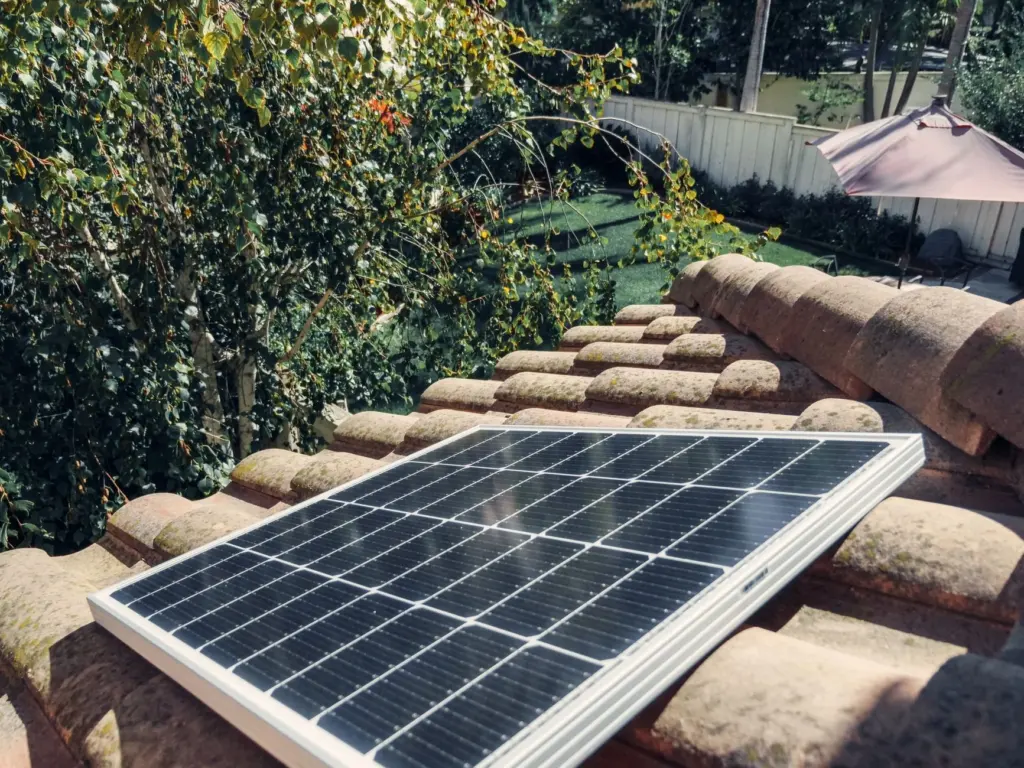
Roof access and sunlight set your recharge ceiling, so check the unit’s maximum solar input before you buy panels. A battery that can store a great deal but accepts little solar input will recover slowly after a long outage.
Sizing a solar generator step by step
To size a solar generator, work out the energy your essentials need, then pick a unit whose capacity and output both exceed it. The method rests on one definition: watt-hours measure energy, the total power used over time.
- List the loads that matter. Write down the refrigerator, lights, router and any medical equipment, and leave out everything that can wait.
- Find each device’s wattage. Read the label or manual, and note which loads are motor-driven and need a startup burst.
- Estimate hours of use. Multiply each device’s watts by the hours it will run to get its watt-hours.
- Add the devices together. Summing the watt-hours for all your devices gives the target battery capacity.
- Match output to the heaviest moment. Choose an inverter rating above the combined wattage of loads that run together, including startup surges.
- Leave headroom. Choose a unit comfortably above the total rather than exactly at it, since the supported ranges are starting points, not exact requirements.
- Plan the recharge. Compare the unit’s maximum solar input with the panels you can realistically mount.
Cross-check the result against the typical starting point of roughly 2kWh to 5kWh and 2000W to 3000W for essentials. If your total lands far above that, either trim the load list or move to an expandable system. If it lands well below, you may not need a whole-home unit at all.
Inside the system: panels, battery, inverter and transfer switch
Understanding the components explains why the sizing numbers behave as they do. Solar panels supply DC power, the battery stores it, and the inverter turns it into household electricity: EcoFlow explains that the solar generator converts DC into AC. The inverter’s rating therefore caps what you can run at once, while the battery caps how long.
Battery chemistry
EcoFlow’s solar generators use LFP batteries, the same chemistry as LiFePO4, and the brand backs them with a five-year warranty. For a backup unit that may sit idle for long periods and then be called on, a stated warranty term is a useful tie-breaker between otherwise similar models.
Connecting to the home
A transfer switch lets a unit feed household circuits instead of requiring extension cords. Anker lists a seamless switchover of less than 20ms, which matters for anything that dislikes a visible interruption. Permanent connections to home wiring are electrical work, so have a qualified electrician plan and fit them.

Frequently asked questions
Does a higher output rating mean a longer run time?
No. Output in watts describes how much the unit can supply at one moment, while capacity in watt-hours describes how long it can keep supplying. A unit can offer high output and modest capacity, so check both numbers before buying.
Can a LiFePO4 solar generator charge in freezing weather?
Charging below 0°C (32°F) is generally not recommended for LiFePO4 batteries. If your outages happen in winter, keep the unit somewhere sheltered and check the manufacturer’s temperature limits before relying on panels to recharge it.
What warranty can I expect on a backup unit?
EcoFlow backs its solar generators with a five-year warranty. Terms vary by brand and model, so compare warranty length and coverage alongside capacity and output.