You swap a petrol car for a bus pass and wonder whether it registered. The carbon footprint of a person is the total greenhouse gases from their activities, usually counted in CO2 equivalent over one year, and it registers wherever fuel burned falls.
Most confusion about the number comes from assuming it covers only CO2, only driving, or a fixed lifetime total. The sections below correct each assumption, then tie the figures to fuel and energy choices you can make. For the wider comparison of energy systems, see fossil fuels vs renewable energy emissions.
A footprint counts more than CO2 from the tailpipe
A carbon footprint is the total amount of greenhouse gases produced to support human activities, both directly and indirectly, as Time for Change defines it. The indirect part matters. Burning fuel in your own car is a direct emission, while the energy used to make what you buy is not visible at your door but still counts.

Because several gases are involved, footprints are converted into one unit. The University of Chicago’s sustainability office explains that the gases are combined into carbon dioxide equivalent, expressed in metric tons. Gases other than CO2 are converted using a time frame, usually 100 years, which is why you will see the label CO2e rather than plain CO2.
| Common assumption | What the footprint counts | Planning use |
|---|---|---|
| It is only carbon dioxide | All greenhouse gases, converted to CO2 equivalent in metric tons; non-CO2 gases are usually converted over 100 years | Compare results only when two calculators report the same CO2e unit |
| It is only about driving | Heating, cooling and lighting of buildings, plus transport, food, waste and products | Check every category before deciding what to change first |
| It is a lifetime or one-off figure | Usually the emissions of one year | Recalculate yearly to see whether a change made a difference |
The unit and activity groups come from the University of Chicago, and the 100-year conversion and one-year period from Time for Change.
The practical lesson is that a footprint is a sum of many small activity lines. One good habit on a single line, such as lighting, will not move the total much if heating or travel is the bigger line. Find the largest line first.
Annual totals and what they can tell you
Two misreadings are common here. The first is treating a country’s ranking as a personal verdict. The U.S. is described as one of the world’s top ten emitters of greenhouse gases, but that is a statement about a nation. Your own figure comes from what you heat, drive, eat and buy, so two neighbours can differ widely. A national headline is a backdrop, and your own calculation is the number to act on.
The second misreading is confusing a ceiling with a target. Time for Change cites a level of less than 600 kg CO2 per person per year as where footprints would need to be reduced to in the medium to long term. That is a direction of travel. It is not a benchmark for what a typical person emits now, and it is not a sensible goal for the first year of changes. Set a smaller first step, such as cutting your largest category, and measure it again after a year.
Home, travel, food and goods: where emissions sit
Home energy
Buildings produce emissions through heating, cooling and lighting, and the University of Chicago’s calculator treats the home as its own category. For most households, the fuel that heats the building and the electricity supplier are the two levers. Fuel-based heating produces direct emissions at home, so the choice of fuel matters; the factors in the next section show how much a litre of heating oil adds compared with road fuels.
Travel
Transport emissions split into air and ground. Climate Hero notes that flying is one of the biggest parts of most people’s footprint, which means a single decision about flights can outweigh many small changes at home. If your calculator shows air travel as a major line, that is where reductions will show up fastest. If you rarely fly, ground transport is the place to look.

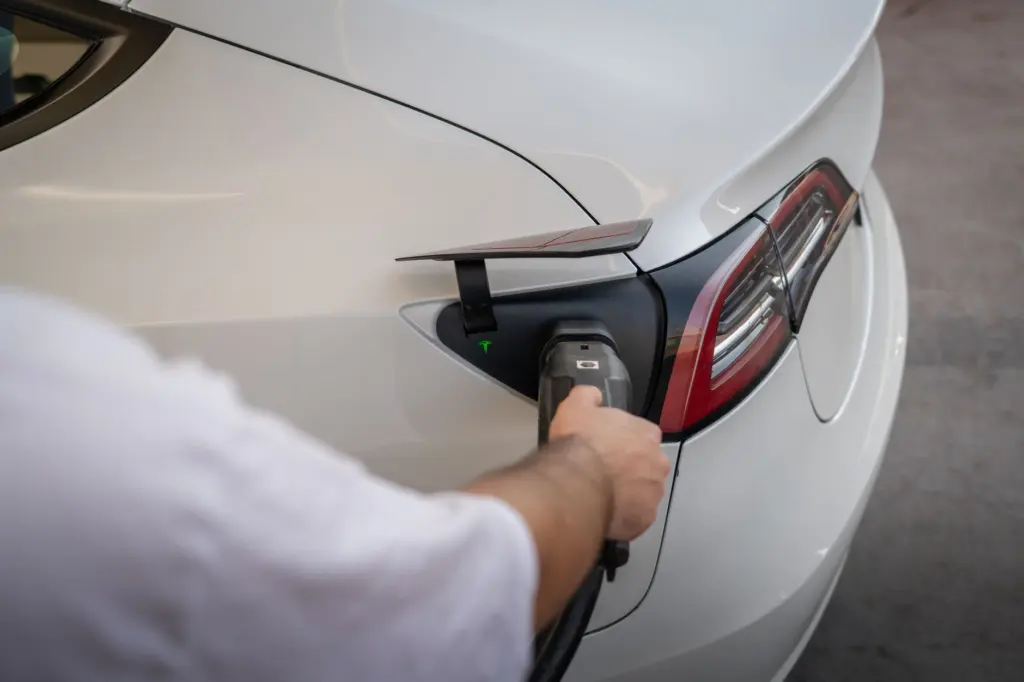
Whether an electric car lowers a footprint overall depends on how the electricity is made and on the manufacturing side, which is covered in Are Electric Cars Better for the Environment? What the Evidence Shows in 2026 – Fixourfuel.
Food and goods
Food, waste and products sit in the same footprint as fuel. Time for Change gives a concrete example: the production of each cheeseburger emits 3.1 kg of CO2. A single item looks small, but repeated purchases add up, and unlike a car trip the emission is generated before the food reaches you. For goods, the same logic applies: what you buy carries production emissions you never see on a bill.
Fuel and energy switches in kg of CO2
Emission factors turn a fuel decision into a number. Time for Change lists the following combustion factors:
- Petrol: 2.3 kg CO2 per litre, or 8.7 kg CO2 per US gallon of gasoline.
- Diesel: 2.7 kg CO2 per litre.
- Heating oil: 3 kg CO2 per litre.
Each litre you avoid burning removes that factor from your total. This makes reduced consumption, not a label, the clearest saving: a household that uses less heating oil lowers its footprint by 3 kg of CO2 for every litre not burned.
Be careful with per-litre comparisons. They compare mass of CO2 per volume of fuel, not what each fuel delivers. For vehicles, compare by distance. Time for Change’s worked example shows 60.75 kg of CO2 added by driving a diesel car over a set distance. That framing lets you test a different vehicle or a shorter route against the same yardstick.
What happens when these fuels burn, and why the CO2 is released, is explained in What Happens When Fossil Fuels Are Burned: The Science, Pollution, And Consequences You Need To Know – Fixourfuel. For personal planning, the useful point is simple: the fuel you burn the most litres of is usually where a switch or a cut pays off most.
Using a calculator without fooling yourself
Calculators do not all measure the same thing. The University of Chicago tool covers home, air and ground transport, while the Climate Hero version covers housing, travel and consumption. A result that includes consumption will look larger than one that does not, and that difference says nothing about your behaviour.
Use one calculator as your baseline and rerun that same tool after you make changes. Switching tools between attempts muddles the comparison. Treat the result as a way to rank your categories, then use emission factors like the ones above to check individual fuel decisions.
Frequently asked questions
| Question | Answer |
|---|---|
| How long does it take to measure my footprint? | A consumer calculator from Climate Hero takes about 5 minutes and covers housing, travel and consumption. |
| Does my country’s emissions ranking tell me my own footprint? | No. Being one of the top ten emitters of greenhouse gases describes a country. Your own figure depends on your home, transport and purchases. |
| How much CO2 does a short car trip add? | Time for Change puts a 6 km (3.75 miles) drive at about 1 kg of CO2. The same source gives public transport covering 10-12 km (a UK mix) as about 1 kg too. |