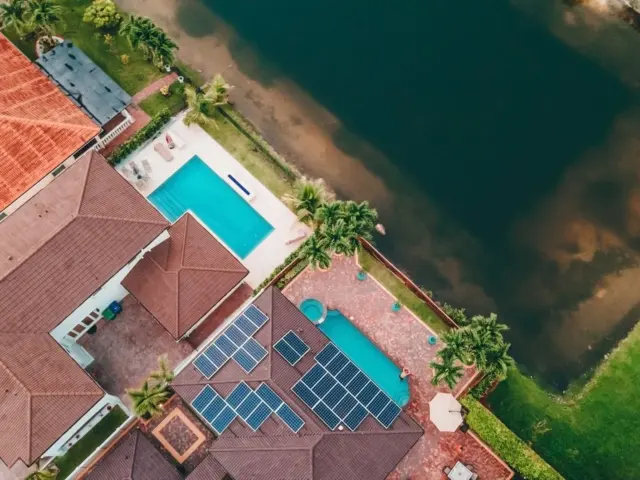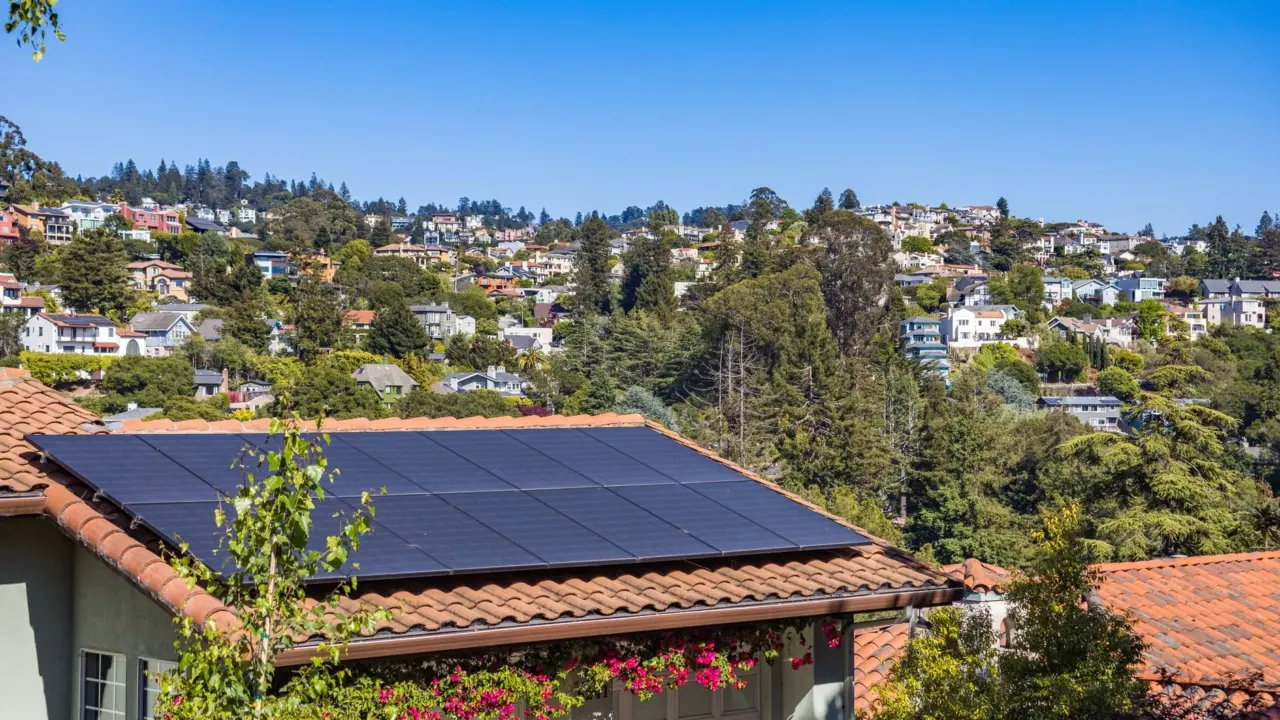
You see panels on a neighbour’s roof and ask: how do solar panels work on a house? Cells turn daylight into DC power, an inverter converts it to AC for your appliances, and the grid covers the rest.
The panels, the inverter and the utility connection together decide what you pay and what you save. This guide sits within our wider coverage of renewable energy and corrects the misunderstandings that most often lead to poor buying decisions. For a balanced view of the trade-offs before you request quotes, read Home Solar Panels: The Real Pros and Cons You Need To Know In 2026 – Fixourfuel.
From sunlight to household power
Photovoltaic cells in each panel absorb sunlight and convert it into direct current (DC) power, as the Canadian Renewable Energy Association explains. That DC output is fed to an inverter, which produces the alternating current (AC) a house uses. The US Department of Energy treats this DC-to-AC conversion equipment as its own system cost category, which is a useful reminder that the inverter is a purchase in its own right and not a hidden extra inside the panel price.
Panel efficiency describes how much of the sunlight striking a panel becomes electricity. Most residential panels are 15–23% efficient. The DOE’s cost benchmark uses an example module rated at 600 W with 21.9% efficiency, which shows where the upper end of the range sits. When roof space is tight, efficiency is the figure to compare. On a large, unshaded roof, a lower-efficiency panel can be a reasonable way to keep the price down.
Common misunderstandings, corrected
Most confusion comes from assuming solar behaves like a generator, a bank account or a fixed appliance. The table sets each belief against what actually happens and how to use that when planning.
| Common belief | What actually happens | Planning use |
|---|---|---|
| Panels keep the lights on in a blackout | Panels alone will not power the building during an outage unless energy storage is attached. | If backup power matters, price a battery as part of the system. |
| Surplus power earns cash | Net metering typically gives bill credits, not money, and terms vary by state and utility. | Read your utility’s credit rules before estimating savings. |
| Output stays the same for life | Panels slowly degrade, losing about 0.5% of their efficiency per year. | Compare production warranties, not just day-one ratings. |
| The roof must face south | South or west is ideal in US guidance, and east-facing roofs can use optimized inverters or microinverters. | Ask for modelled production for your actual roof planes. |
| A full offset of household electricity use is not required | Size depends on energy use, roof orientation and tilt, available space and budget, so a full offset is not required. | Size to your goals and budget, not to a full-offset target. |
Figures are drawn from the Canadian Renewable Energy Association and the California Center for Sustainable Energy.
Components and what each one costs you
A home system has few moving parts, but each one affects either the upfront price or the long-term bill. The most useful way to compare quotes is part by part.
- Panels. They come with a 25-year production warranty and an expected lifespan of 20–25 years. Treat the warranty as the guarantee that output will not collapse early, and the gradual decline as the normal wear you should model into your savings.
- Inverter. A central inverter comes with a 10-year warranty, while a microinverter carries 25 years. A central inverter’s shorter cover means you should ask the installer what happens when it expires. Microinverters and optimized inverters also suit east-facing roofs, which makes them worth pricing if your roof is not ideally oriented.
- Battery (optional). A home battery can store the extra electricity your panels produce during the day for use in the evening or during an outage. It also reduces purchases from the grid at peak hours. It suits households that want backup power or whose utility pays little for exported electricity. It is an added cost with no effect on how the panels themselves work.
Grid-tied systems, off-grid systems and the night-time question
The majority of solar PV and battery storage systems installed across Canada are grid-tied. Surplus production is exported to the utility, and the house keeps its normal utility connection for the hours when panels are not producing. After dark the panels generate nothing, so a grid-tied home without a battery buys power as it always did.
That connection is also why a grid-tied house does not automatically have backup. A battery is the component that turns surplus daytime production into evening supply and gives the house something to run on when the utility is down. An off-grid system has no utility to fall back on, so storage is essential there rather than optional. For most households that already have reliable grid service, grid-tied is the simpler and cheaper arrangement. Off-grid suits properties where a utility connection is unavailable or impractical.
Net metering and incentives
Net metering is how a grid-tied system gets paid for exports. Under Canadian net metering guidance, excess power sent to the utility is credited at the same per-kWh rate as the power you buy, on a 1:1 basis, while net billing arrangements differ. In the US, the owner typically receives bill credits, not money, which can be banked for later use. Credits reduce a later bill but do not pay out as cash, so a system that regularly overproduces gains less than the headline rate suggests.
Incentives have changed. The federal Residential Clean Energy Credit, also known as the Investment Tax Credit, is unavailable after Dec. 31, 2025, which leaves state and local programs as the main incentives. Ask any installer which programs apply to your address and whether their quoted price already reflects them.
Cost and sizing
Typical installed cost
The California Center for Sustainable Energy puts the national average installed cost of a residential solar system at approximately $3.36 per watt. On that basis, an average 7 kW system costs about $23,500. Treat both as a starting point for judging quotes and not as a price you should expect. The DOE defines system cost as the price paid by the system owner to the project developer, and it treats tax credits separately. When you compare a quote with a benchmark, check whether incentives have already been deducted.
For current benchmarks, the NLR installed-cost page covers residential rooftop, commercial rooftop and utility-scale ground-mount systems. Since 2024 that work has been a DOE-led joint effort with Sandia and Lawrence Berkeley national laboratories. The cost side is only half the picture, because solar can reduce your grid energy use and monthly bill. The size of the saving depends on your system and your utility’s credit rules.
Choosing a system size
System size depends on your home’s energy use, roof orientation and tilt, available space and budget. Start with your annual electricity use in kilowatt-hours, since that is the unit your utility bills and credits you in. Then ask installers to show their modelled output for your roof planes. A bigger array is not automatically better if surplus exports earn only bill credits. If your use may rise, such as an added household load, say so when you request quotes so the design allows for it.
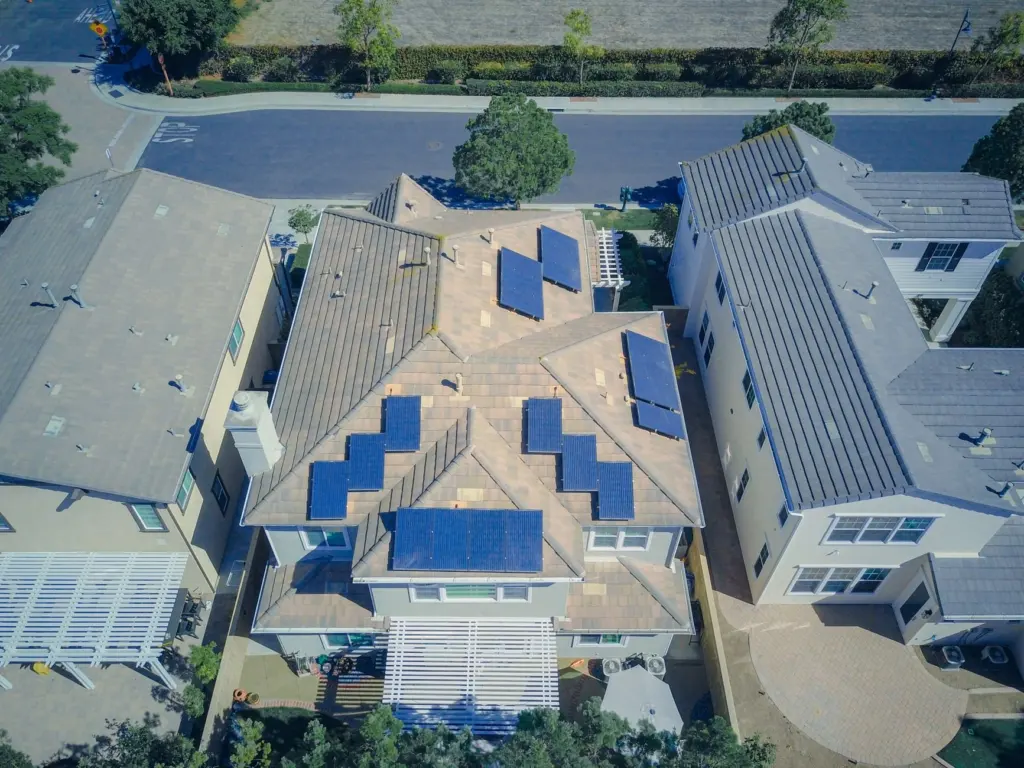
If your main goal is hot water rather than electricity, a different technology may fit better. Our guide to Solar Water Heaters: Save Energy And Get Reliable Hot Water All Year (2026 Guide) – Fixourfuel explains that route.
Frequently asked questions
| Question | Answer |
|---|---|
| How long does installing home solar take? | After permits are in place, a typical residential installation takes as few as one to three days. Permitting is a separate step. |
| What is a solar lease or power purchase agreement? | With a lease or PPA you pay either a fixed amount per month or a fixed amount per kilowatt-hour the system produces. The terms are typically 20 years, so read the contract length before comparing it with buying outright. |
| Where can I check solar incentives for my state? | DSIRE offers a comprehensive list of solar incentives by state, which is the best place to confirm which programs apply to your address. |
| How long do home solar panels last? | Panels have a lifespan of 20–25 years, according to the California Center for Sustainable Energy. Output declines gradually over that time and does not stop abruptly. |