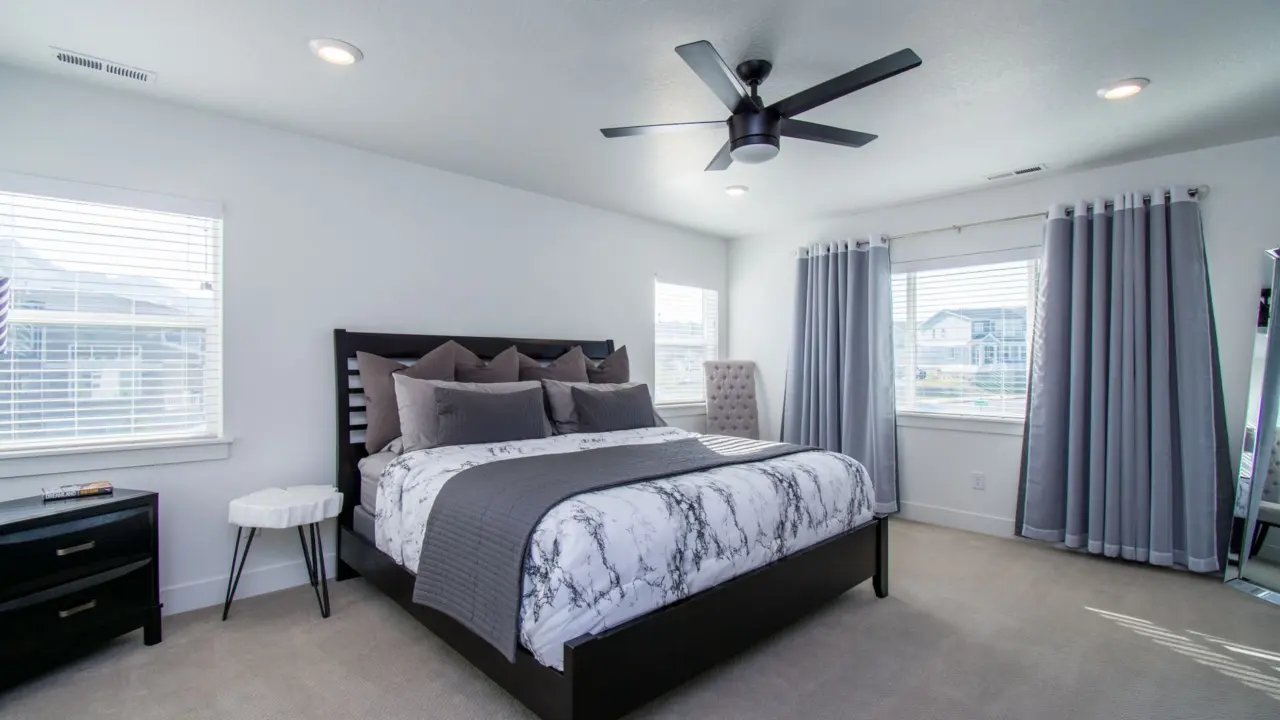
Wondering how much electricity does a fan use overnight? Most modern ceiling fans draw 50-100 watts, according to SolarTech Online, so running one all night costs a few dollars a month, far below air conditioning.
Fans are among the cheapest ways to keep air moving at home. Trimming their draw is a small win next to changing how your power is supplied, which the renewable energy section covers.
Watts, kilowatt-hours and your rate
A common misunderstanding is that the wattage on a fan’s label is what you pay for. Watts only describe how hard the fan draws power at a given moment. The unit on your bill is the kilowatt-hour, which SolarTech Online defines as the total energy used over time. A fan’s running cost therefore depends on three things you can influence or check.
- Fan type and speed. Each type and setting has its own draw in watts, shown in the table below.
- Hours of use. Because a kilowatt-hour measures energy over time, a fan on all night uses more energy than the same fan on for an afternoon.
- Your electricity rate. The same fan costs different amounts in different places. SolarTech Online uses a US national average of 17.1 cents per kWh in its examples, and your own bill may differ.
With those three levers in mind, the next step is to see how far apart the fan types really are.
Wattage by fan type and speed
Fans are not interchangeable. A ceiling fan on low speed and a box fan on high sit at opposite ends of the scale.
| Fan type and setting | Typical draw | Planning use |
|---|---|---|
| Modern ceiling fan, general range | 50-100 W | Starting estimate when you cannot read the label |
| Ceiling fan, 44-48 in, low speed | 25-35 W | Best choice for overnight running |
| Ceiling fan, 44-48 in, medium speed | 40-55 W | Everyday daytime setting |
| Ceiling fan, 44-48 in, high speed | 55-75 W | Use only when the room needs it |
| Ceiling fan, 52 in and larger, high speed | 75-100 W | Expect the top of the ceiling-fan range |
| Tower fan | 30-60 W typical | Efficient portable option for a bedroom |
| Larger pedestal fan | Up to 120 W | Treat as a ceiling, not an average |
| Box fan | 75-220 W, limited coverage area | Highest draw for the least reach |
Ceiling-fan and box-fan figures come from SolarTech Online, and tower and pedestal figures from Morris Direct.
Ceiling fans
Many people assume a ceiling fan is a heavy appliance because it is large and fixed to the ceiling. The table shows the opposite on its lower settings. A 44-48 in fan on low speed draws 25-35 W, and the same fan on high draws 55-75 W. Size matters at the top end: a fan of 52 in or more reaches 75-100 W on high.
The practical decision is speed. If the room is comfortable on low or medium, staying there keeps the draw near the bottom of the range. Reserve high for the hottest hours.
Portable fans
A portable fan is not automatically cheaper than a ceiling fan. Box fans draw 75-220 W and cover a limited area, so on these figures they can use more power than a ceiling fan while reaching fewer people. A typical tower fan uses 30-60 W, and larger pedestal models go up to 120 W.
For a bedroom, a tower fan or a ceiling fan on a low setting is usually the lower-draw choice. A box fan makes sense only when you need its output and are happy to accept the higher wattage.
What a night of running costs
The fear that leaving a fan on all night will noticeably raise a bill rarely holds up. Costs are easiest to compare over a month, and an overnight run corresponds to 8 hours a day.
At the 17.1 cents per kWh US average, SolarTech Online puts a ceiling fan running 8 hours daily at $3.06-6.12 per month. The spread between the two ends reflects speed and fan size. In the UK, Morris Direct reports that a 40 W fan run 8 hours a day costs £2.5 per month at 26.11p per kWh.
These figures are not directly comparable, because the currencies, rates and fans differ. What they do show is the pattern:
- Low-draw fans cost little even every night. A fan in the 25-55 W band on low or medium is the cheapest overnight option in the table above.
- Rate changes the bill as much as the fan does. A higher price per kWh raises the cost of every hour. Check the rate on your own bill before judging any estimate.
- Speed settings are the easiest saving. Moving a medium-size ceiling fan from high to low changes its draw from 55-75 W to 25-35 W.
Those monthly sums are small, which raises the obvious comparison with the appliance a fan is usually meant to replace.
Fan versus air conditioning
A fan is much cheaper to run than air conditioning. Palm Fan Store says air conditioning typically costs about 10 to 15 times more per hour than a ceiling fan.
The monthly figures agree. SolarTech Online lists a window air conditioner at 500 W, costing $20.52 per month at 8 hours daily. The same source puts a ceiling fan at $3.06-6.12 for the same hours and rate.
The decision is rarely either-or. If moving air is enough to keep you comfortable, the fan is the low-cost choice. If it is not, the air conditioner is the more expensive appliance to keep running, so it is worth using it for the hours you need it rather than all night by default.
Ways to cut fan electricity use
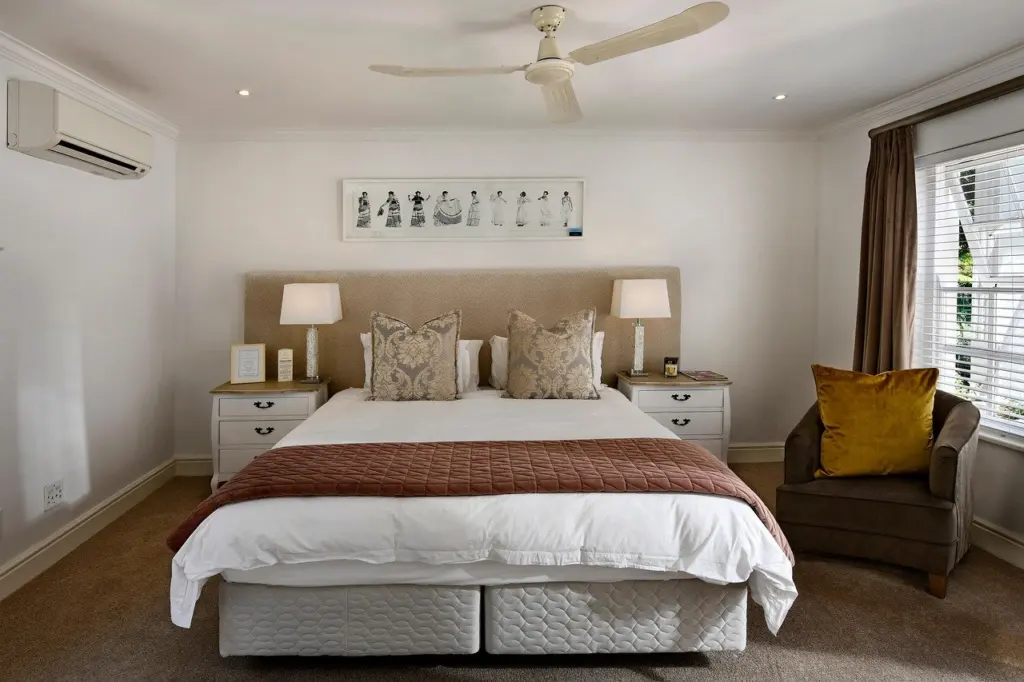
Fans are already low-cost, so the best savings come from a few habits and one purchase decision.
- Drop a speed. On a 44-48 in ceiling fan, low uses 25-35 W against 55-75 W on high. Try the lower setting first and step up only if the room needs it.
- Consider a BLDC motor when replacing a fan. Manufacturer Orient Electric states that its BLDC fans consume only 26-35 W, compared with 70-75 W for a conventional fan. This suits a fan that runs for many hours, such as a bedroom fan used nightly. Since these are manufacturer specifications, check the rating on any model you buy.
- Pick the right type for the space. A box fan draws 75-220 W for a limited coverage area, while a tower fan typically uses 30-60 W. For one person in one room, the tower fan draws less.
- Cut hours before comfort. Energy use accumulates over time, so switching a fan off in an empty room lowers the kilowatt-hours on your bill without affecting anyone.
- Know your rate. Cost scales directly with price per kWh, so the same habits save more where electricity is expensive.
Other appliances worth checking
If you are working through your household running costs, the same watts-to-kWh approach applies elsewhere. For a heating-side comparison, see How Much Electricity Does An Electric Fireplace Use? Real Costs, Power Draws, And Easy Ways To Save (2026) – Fixourfuel. For laundry, How Much Electricity Does a Washer and Dryer Use? Real-World Cost Estimates And Ways To Cut Usage (2026 Guide) – Fixourfuel works through the same calculation.
Frequently asked questions
| Question | Answer |
|---|---|
| Does a bigger ceiling fan always cost more to run? | At high speed, yes on these ranges: a 52 in or larger fan draws 75-100 W, while a 44-48 in fan draws 55-75 W. On low speed, medium-size fans draw just 25-35 W. |
| Is a tower fan or a box fan the better portable choice for power use? | The tower fan, if lower draw is the goal. A typical tower fan uses 30-60 W, while box fans range from 75-220 W and cover a limited area. |
| Why do published running costs for fans differ so much? | Each figure depends on the fan’s wattage, hours of use and local price per kWh. An example at 17.1 cents per kWh will not match one at 26.11p per kWh, so compare estimates only when those inputs are similar. |
| How can a new fan lower my electricity use? | A BLDC model is the clearest route. Orient Electric lists its BLDC fans at 26-35 W against 70-75 W for conventional ones, which matters most for a fan that runs every night. |