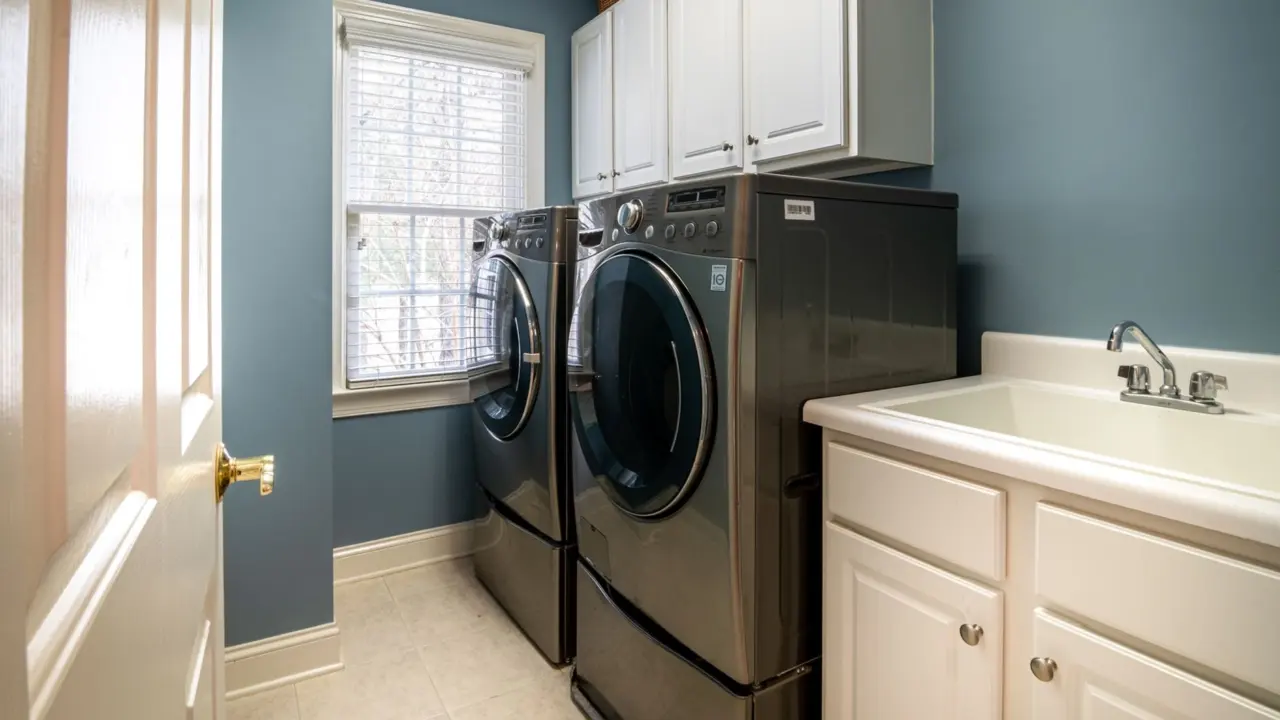
How much electricity does a washer and dryer use? On average the dryer draws about 3,000 W against about 500 W for the washer, and hot water is the washer’s main extra cost.
Laundry bills tend to surprise people because the washer gets the blame while the dryer does most of the damage. This guide separates the two appliances and gives figures you can rescale with your own rate. It sits within our wider renewable energy coverage of household power.
What each machine draws
A washing machine motor is a modest load. Appliance Running Cost puts the motor at 300 to 1,000 W, and ATCO Energy cites an average of about 500 W for a clothes washer against about 3,000 W for a typical clothes dryer. Enphase lists dryers at 1,800 to 5,000 W and notes that long cycles draw a lot of power.
Wattage only becomes a bill once it is multiplied by running time. ATCO Energy estimates that a dryer doing just 5 loads per week could easily consume over 1,000 kWh per year. A washer runs at lower power for a similar stretch, so the dryer is where most laundry electricity goes. The washer’s cost depends mostly on whether it heats the water, which the next section shows.
Washer cost per load by cycle
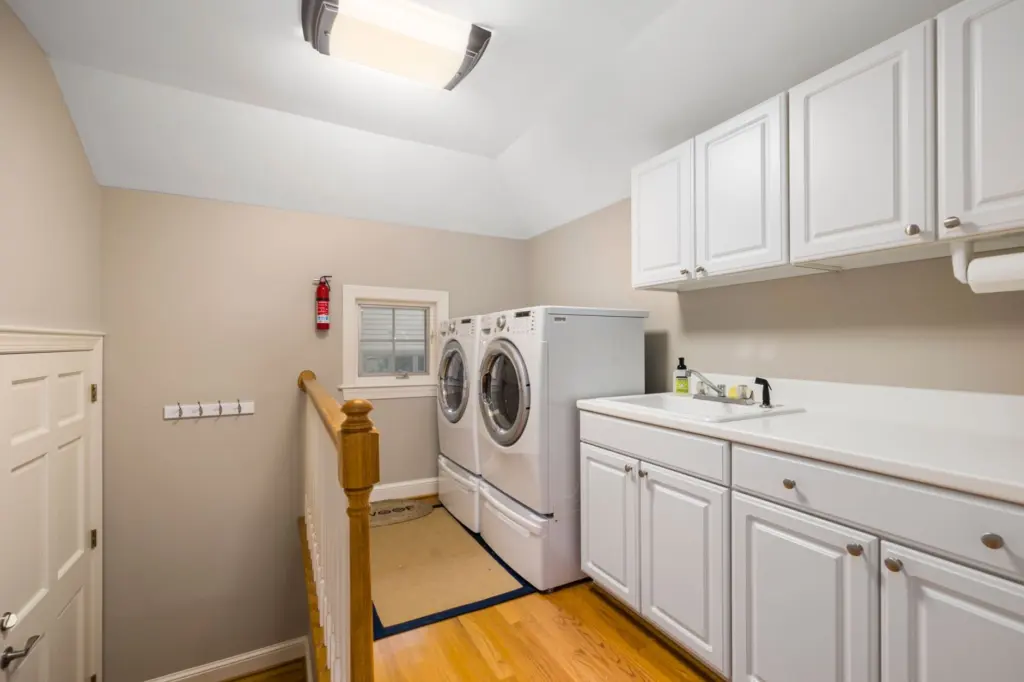
A front-load washer on a cold cycle uses roughly 0.3 to 0.5 kWh per load. Once the cycle heats water, the figures change sharply, as the comparison below shows. The cost column assumes the US average rate of $0.18 per kWh.
| Washer and cycle | Energy per load | Cost per load at $0.18/kWh | Planning use |
|---|---|---|---|
| Top-loader (agitator), cold | 0.5 to 1.0 kWh | $0.09 to $0.18 | Baseline for an older-style washer you run cold |
| Front-loader, hot (including water heater) | 2.5 to 3.5 kWh | $0.45 to $0.63 | Reserve for loads that genuinely need it |
| Top-loader (agitator), hot (including water heater) | 3.0 to 4.0 kWh | $0.54 to $0.72 | The costliest washer pattern in this comparison |
Figures are from Appliance Running Cost, which attributes the spread almost entirely to water temperature.
The practical reading is that cycle choice matters more than washer type. A front-loader on cold sits at the bottom of the range. Switching a top-loader from hot to cold moves it from the most expensive pattern to the cheapest of the machines listed. If your rate is higher or lower than $0.18 per kWh, scale the cost column in proportion, or use the formula further down.
Washer misunderstandings that inflate bills
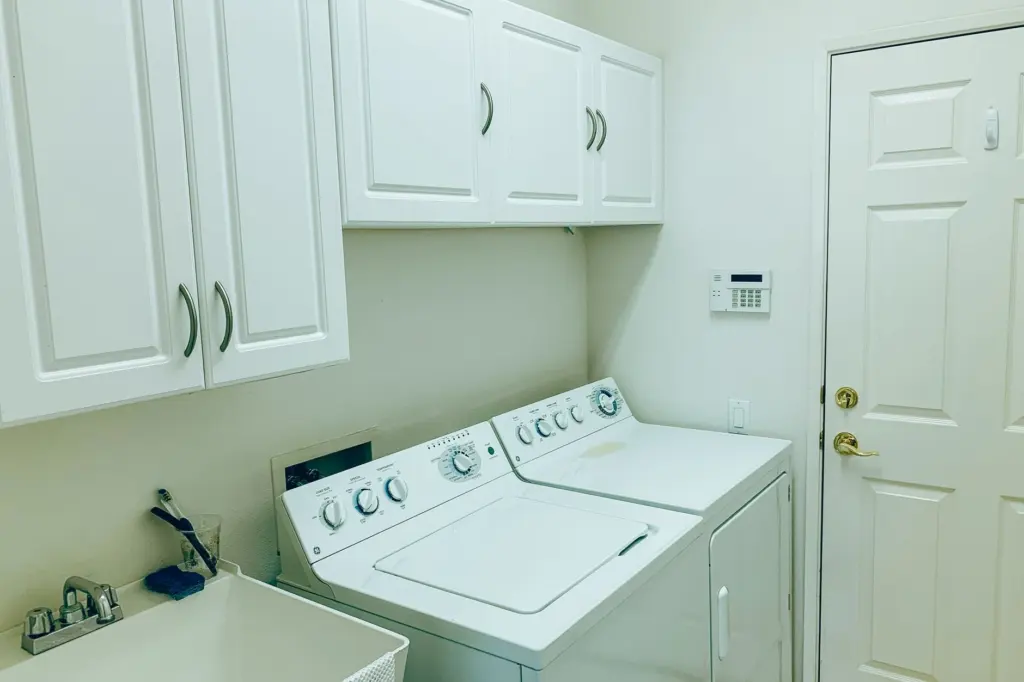
Several habits come from assuming the washer works like other appliances, where bigger loads or longer runs mean proportionally more power. The supported figures point elsewhere.
- “The motor is the expensive part.” It is not. Appliance Running Cost reports that roughly 90% of the energy in a hot wash goes to heating the water, not to running the motor. That is why the cycle temperature, not the machine’s mechanics, sets the cost.
- “A half-full drum uses half the power.” The same source says a washer uses nearly the same electricity whether it holds 10 items or 30. A part-empty drum therefore costs about as much as a full one, so waiting for a fuller load lowers the cost per garment.
- “Quick cycles clean worse.” For lightly soiled clothes, the source says express or quick-wash cycles clean just as effectively while using 20% to 50% less electricity per load. Keep the long cycle for heavily soiled items.
- “ENERGY STAR is just a badge.” Natural Resources Canada figures, cited by Peace Power, say an ENERGY STAR certified washer uses about 25% less energy and 33% less water on average than a standard model. That makes certification a sensible filter when replacing a washer, and it matters most for households that wash often.
Dryer misunderstandings and heat pump models
The dryer is the larger share of the electricity, so the mistakes here cost more.
- “A longer timer is the safe choice.” Peace Power notes that sensor dry is generally preferable to running a long timed cycle. A sensor stops when the clothes are dry, while a timer keeps drawing power at the dryer’s full wattage until it finishes.
- “Heat pump dryers cost too much to be cheaper.” Purchase price and running cost are different questions. Yes, heat pump dryers are cheaper to run. Peace Power, citing Natural Resources Canada, says they can use 20% to 60% less energy than standard models. They can cost more upfront, and the savings can be significant for households that do a lot of laundry. A household drying a few loads a week will take longer to recover the difference than one running the dryer most days.
- “Dryer wattage is fixed.” The 1,800 to 5,000 W range quoted earlier is wide. Check the rating on your own machine before estimating, because a high-wattage model on a long cycle can cost far more than the average suggests.
A reusable formula for your own per-load cost
The most useful tool is the multiplication itself. The Centre for Sustainable Energy describes the cost of running an appliance as its wattage multiplied by the time it is on, then multiplied by the cost of electricity. Follow these steps for any cycle.
- Find the wattage. Use the rating on the appliance label, or a typical figure from the ranges above if the label is hard to read.
- Convert to kilowatt-hours. A kilowatt-hour (kWh) is the unit your bill uses. Enphase gives the conversion as watts multiplied by hours used, divided by 1,000. Its example is 1,500 W running for 3 hours, which equals 4.5 kWh.
- Multiply by your electricity rate. Take the price per kWh from your bill. Enphase shows 6.1 kWh multiplied by $0.16, the 2024 US average rate, giving $0.98 per month. The washer table above uses $0.18 per kWh, and the CSE appliance costs use 26p per kWh, the July 2026 UK average direct debit rate. Your own rate may differ from all of these.
For a dryer, the CSE shows a 2,500 W tumble dryer costing 65p per hour at that 26p rate. To get a per-load figure, multiply your dryer’s hourly cost by how long a typical load runs. For a washer, use the kWh per load from the table above times your own rate. The same wattage-times-time method works for other appliances too. For another appliance run through a similar cost estimate, see How Much Electricity Does a Fan Use? Real Costs, Examples, And Savings In 2026 – Fixourfuel. To turn per-appliance figures into a whole-bill estimate, How Much Will Electricity Cost? kWh Calculator Guide To Estimating Your Energy Bills In 2026 – Fixourfuel covers the wider calculation.
Cutting laundry energy costs
Order your changes by how much each one removes. Water heating and dryer use dominate, so start there.
- Wash cold. Appliance Running Cost estimates that switching all hot washes to cold can save $50 to $100 per year for a typical household. This is the single largest saving available without buying anything.
- Air-dry part of the load. ATCO Energy suggests using a drying rack or clothesline for part of your load. Anything dried that way uses no dryer energy at all, so it suits towels-free loads, light garments and warm days best.
- Clean the lint trap after every load. Natural Resources Canada recommends this, according to Peace Power. It takes seconds and costs nothing.
- Match the machine to your volume. If you wash and dry often, an ENERGY STAR washer or a heat pump dryer is where the efficiency figures above pay off. If you do little laundry, the free changes will deliver most of the saving.
Those habits are cheap to adopt. A plug-in meter or the formula above will then show whether the next step, replacing an older appliance, is worth the price.
Frequently asked questions
| Question | Answer |
|---|---|
| How much does 10 minutes of dryer time cost? | The Centre for Sustainable Energy lists 11p per 10 minutes for a 2,500 W tumble dryer at a unit price of 26p per kWh. Your cost scales with your own dryer’s wattage and your rate. |
| How much does it cost to run a washer for a year? | At 7 loads per week and $0.18 per kWh, Appliance Running Cost estimates $17 to $33 per year for an ENERGY STAR front-loader washing everything cold. Mixed cold and warm washes in a front-loader come to $30 to $54 per year. |
| What is the full cost range for one washer load? | One load costs between $0.05 and $0.72 in electricity at $0.18 per kWh, depending almost entirely on water temperature. |
| What does the EnerGuide label show? | According to Natural Resources Canada, as cited by Peace Power, the EnerGuide label shows an appliance’s annual energy consumption in kWh and lets you compare it with similar models. A lower number means lower use. |