
A new owner reads 3,000 W on the heater label and worries. How much electricity does a hot tub use? The label shows draw while the heater runs; the bill depends on run time, price per kWh, climate and habits.
Most of the confusion comes from treating a power rating as a monthly total. The sections below separate the common myths from the factors that move the bill, then turn kilowatt-hours into money and show where cleaner supply fits. For the wider picture of low-carbon power at home, start with our renewable energy hub.
Reading the heater label correctly
A kilowatt-hour (kWh) is the unit your supplier bills: power in kilowatts multiplied by the hours it runs. Direct Energy explains that a hot tub with a 120-volt heater consumes 3,000 watts while in use, which is 3 kWh per hour, and that a larger heater reaches 7.5 kWh per hour. Those numbers describe the rate of consumption while the heater is working. They say nothing about how many hours it works in a month, and that is the figure that sets your bill.
Manufacturers also cap power. Aquavia Spa states that most of its models are factory-set to stay at or below 3.5 kW, with some Premium or swim spa models going up to 6 kW. A cap is a ceiling, not a typical draw, so it is a poor basis for estimating a monthly cost. It is more useful for checking that your electrical supply can carry the tub than for predicting what you will pay.
| Common misunderstanding | What the evidence shows | Planning use |
|---|---|---|
| A bigger heater means a bigger bill | A heater with a larger kW rating heats the water faster but does not need to stay on as long | Compare tubs on insulation and cover quality before heater kW alone |
| The heater draws its full rating all month | Most models are factory-set not to exceed 3.5 kW; some Premium or swim spa models reach 6 kW | Treat the rating as a ceiling while heating and use your own meter for real use |
| The water should always sit at full temperature | Keeping water at 37–38°C (99–100°F) is common, and it can be lowered a few degrees when the tub is unused | Set a lower idle temperature for quiet periods and raise it before use |
The figures above come from WhatSpa’s running-cost guide and the manufacturer guidance published by Aquavia Spa.

What moves the monthly figure
Direct Energy says the actual energy cost of running a hot tub depends on your cost per kWh, your local climate and your use habits. That is why a neighbour’s monthly figure transfers poorly to your yard. Treat any published total as an illustration of the method, not a prediction for your tub.
- Climate. Local climate is one of the named cost drivers, so an outdoor tub in your area is the only reliable guide to your own figure.
- Use habits. How often the tub is used and how it is kept between soaks changes how much the heater has to do. A tub kept at a steady idle setting behaves differently from one heated from cold before each use.
- Price per kWh. The same kWh costs different amounts under different tariffs, so two identical tubs can produce different bills.
- Insulation. Better high-density foam insulation and a good cover keep the heater working less, which shows up in both smart meter readings and running costs.
For efficient tubs in the UK, WhatSpa puts running costs at a daily range that depends on the electricity tariff. That is a cost for efficient models at one tariff, not a universal rule. If your rate is higher or your tub is less efficient, expect a different result.
Turning kWh into dollars
The calculation is the same whatever the tub, and it only needs your own run time and your own rate. Work through it in order.
- Find the heater’s power. Read the heater rating on the spa’s specification. A 3,000 W heater uses 3 kWh per hour while it runs, as Direct Energy explains.
- Establish how long it runs. Heater hours are the hardest input to guess. A smart electricity meter or an energy monitor on the tub’s supply gives a measured figure for a period of normal use.
- Convert to kWh. Multiply the heater’s kW rating by the hours it runs, then add the pump and other loads if your meter reading does not already include them.
- Apply your tariff. Multiply total kWh by your price per kWh. This is the step that links the tub to your tariff.
A published example from Aquarest multiplies 220 kWh by $0.15 per kWh to reach $33 per month. Use it to check that your own method gives sensible results, then swap in your readings and rate.
The smart meter is the best check on any estimate. Compare your recorded use over a period with the tub running against a similar period without it, and you have a measured monthly kWh figure that removes most of the guesswork. If you change the cover or the set temperature, repeat the comparison so you can see what the change did.
Green tariffs and clean power
A green tariff or clean-power supply changes the price you pay per kWh, not the number of kWh the tub draws. So the method above does not change: use the same steps and enter the rate that your tariff quotes. Because running cost depends on the cost per kWh, whether a clean-power plan raises or lowers the bill depends entirely on the rate your supplier offers.
If you generate some of your own clean electricity, the same logic applies to the portion you still buy from the grid. Measuring the tub’s kWh first tells you how much supply you would need to cover. For a broader look at the supply options behind these tariffs, see Cleaner Energy Alternatives To Fossil Fuels: Practical Options For 2026 – Fixourfuel.
Cutting power use without ruining the soak
The cheapest kilowatt-hour is the one the heater never has to produce, so reducing heat loss comes before anything else. Start with the cover, then look at the set temperature.
Cover and insulation
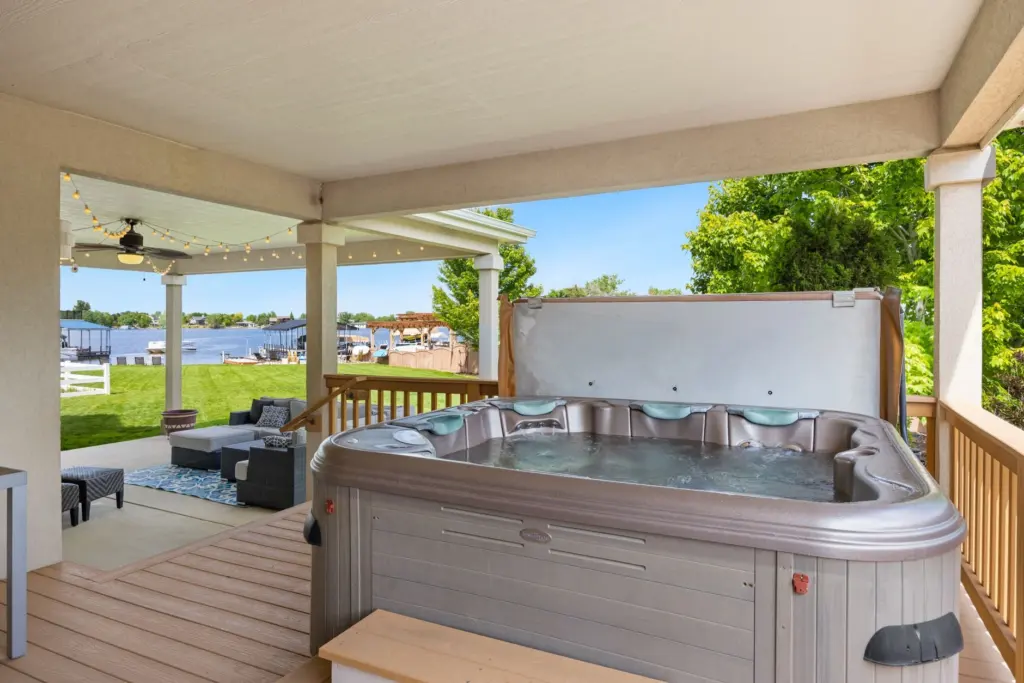
Direct Energy reports that a well-fitting, insulated cover prevents up to 70% of heat loss. That is a ceiling for a good fit, so a worn or poorly fitted cover will save less. If your cover is damaged or does not seal, replacing it is the most direct way to reduce the heater’s workload, and it suits owners of any tub size.
Set temperature
Aquavia Spa notes that keeping water at 37–38°C (99–100°F) is common and that it can be lowered a few degrees when the tub is not in use. Direct Energy adds that dropping the thermostat by 3–5°F can reduce heating costs by 10–20%. This suits owners who use the tub in short bursts, because they can accept a short wait to reheat. If you soak most days, the saving from a lower idle setting is smaller because the water spends less time idling.
Winter and wider habits
Cold weather is when heat loss matters most. Our guide to Energy-Saving Winter Hacks: 21 Practical Ways To Cut Bills And Stay Warmer In 2026 – Fixourfuel covers household measures that sit alongside the tub-specific ones here.
Frequently asked questions
| Question | Answer |
|---|---|
| Can a hot tub run from a normal household outlet? | Plug and play models run on a standard 120 V household outlet, according to Grand Traverse Leisure. Check the specification for your model before assuming. |
| Does heating at night save money? | Where time-of-use rates apply, running heaters at night when rates are lower can cut cost, and a spa timer can automate it, as Direct Energy advises. |
| Does the tub’s own insulation matter if the cover is good? | Yes. WhatSpa says better high-density foam insulation is kinder to your smart meter readings and running costs, so a good cover works best with a well-insulated cabinet. See WhatSpa for detail. |