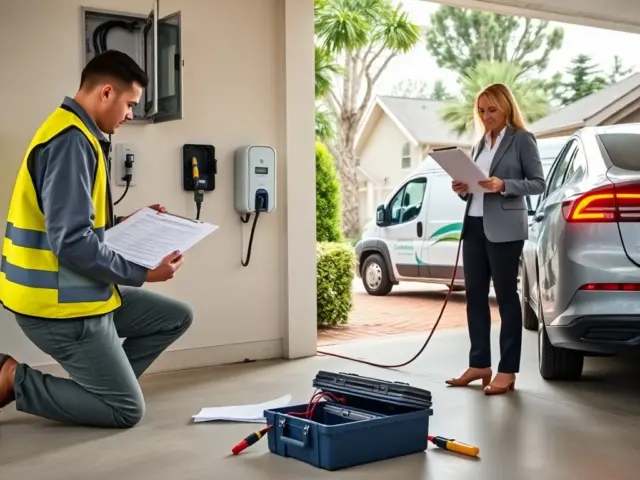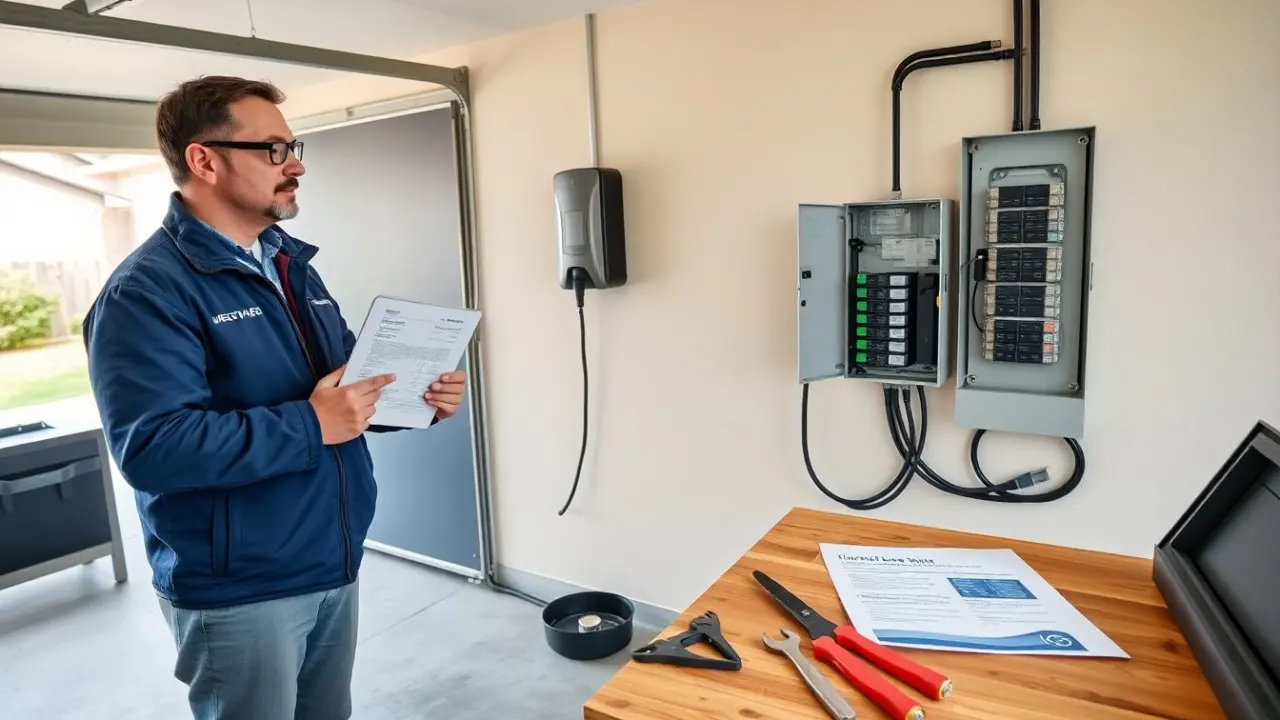
Level 2 charger installation cost matters to any EV owner who wants faster home charging. The article states typical price ranges and main cost drivers. It shows where extra fees appear. It lists rebates and choices that lower total spend. It explains how installers work and what homeowners should expect during installation.
Key Takeaways
- Level 2 charger installation cost typically ranges from $500 to $2,500 depending on equipment, labor, permits, and electrical upgrades.
- Choosing the right charger type, such as a NEMA-plug or networked charger, can significantly affect both purchase and installation costs.
- To lower level 2 charger installation cost, homeowners should utilize federal and state incentives, select a charger close to the panel, and bundle electrical upgrades when possible.
- Obtaining multiple quotes and ensuring installers are licensed and insured helps control expenses and ensures a smooth installation process.
- Homeowners should expect one to three days of active work for simple installs, with longer timelines for panel upgrades or trenching, including permit pulling and inspections.
Quick Cost Snapshot: Typical Price Range And Key Factors
Homeowners ask about level 2 charger installation cost first. Typical totals range from $500 to $2,500. The low end covers a basic charger and short plug-in install. The high end covers a hardwired unit plus panel work and permit fees. Key factors change the price. They include charger model, site distance to the electrical panel, required panel upgrades, permit costs, and labor rates. Weather or driveway layout can affect labor time. Utility rules and local inspection timelines can add days and small fees.
Detailed Cost Breakdown: Equipment, Labor, Permits, And Upgrades
Homeowners should break down level 2 charger installation cost into clear parts. This section lists typical costs for equipment, labor, permits, and possible upgrades.
Charger Unit Price And Types (NEMA, Networked, Power Levels)
A standard level 2 charger unit costs $300 to $900. A basic NEMA-plug charger sits at the low end. A hardwired non-networked unit sits in the mid range. A networked charger with Wi‑Fi and load management costs $600 to $1,200. Higher-power units that deliver 48 amps or more cost more. The buyer should match charger power to vehicle acceptance and home circuit capacity.
Installation Labor, Electrical Upgrades, Permits, And Inspection Fees
An electrician charges $200 to $800 for a simple install. Complex installs cost $800 to $1,800. A panel upgrade usually costs $800 to $2,500. A new circuit and breaker cost $150 to $400. A permit and inspection cost $50 to $300 depending on the city. Trenching or long conduit runs add $200 to $1,000. If the installer must run conduit through finished spaces, the labor and repair costs can add several hundred dollars.
Common Installation Scenarios With Example Budgets (Garage, Driveway, Condo)
Scenario budgets help people plan level 2 charger installation cost.
Garage, near panel. The home has a garage next to the main panel. The electrician installs a hardwired 40‑amp charger. The work takes a few hours. Estimated cost: $700 to $1,200 (charger + labor + permit).
Driveway, long run. The panel sits inside the house at the opposite side. The installer trenches or runs long conduit. The charger uses a NEMA plug to avoid extensive panel work. Estimated cost: $900 to $2,000 (charger + trenching + labor + permit).
Condo, shared electrical. The owner must work with the association. The building may require special metering or a common-area charger. The owner may pay for a dedicated circuit and an install that meets association rules. Estimated cost: $1,000 to $3,000 (permits, metering, association fees).
Ways To Lower Your Installation Bill: Incentives, Rebates, And Smart Choices
Several steps can reduce level 2 charger installation cost.
Check federal and state incentives. Many states help lower the upfront cost. The federal tax credits that apply to charging equipment can reduce net spend. Local utility rebates may cover part of the charger cost.
Pick the right charger. A mid-range charger often gives the best value. A networked charger makes sense only if the owner needs remote control and monitoring.
Reduce electrical work. A NEMA‑plug install can cut labor if the home circuit supports it. Place the charger close to the panel to reduce conduit and trenching.
Bundle upgrades. When a panel upgrade is already planned, combine the work with the charger install. The combined job can save labor costs.
Get multiple quotes. Three bids give a clear price range. Installers vary in hourly rates and experience. A comparison prevents overpaying.
How To Choose An Installer And What To Expect During The Process
Homeowners should follow a simple path when they choose an installer for level 2 charger installation cost control.
Verify license and insurance. The homeowner should confirm the electrician holds a current license and carries insurance. Check online reviews and ask for references.
Request a site visit. The installer should inspect the panel, measure run distance, and note obstacles. A site visit leads to an accurate estimate.
Get a written estimate. The estimate should list charger cost, labor hours, permit fees, and any upgrade fees. Compare line items across bids.
Schedule work and permits. The installer should pull permits and arrange inspection. The homeowner should expect one to three days of active work for simple installs and longer for panel upgrades or trenching.
Test and document. The installer should test the charger with the vehicle, show the homeowner how to use the unit, and provide warranty paperwork. The homeowner should keep receipts for rebate or tax credit claims.