| Charging type | Supported figure | Planning use |
|---|---|---|
| Level 1 | Up to 24 hours to fully charge a battery | Fine for topping up. Do not plan around it if you need a full battery regularly. |
| Level 2 (speed) | 30 to 50 km (20 to 30 miles) of range per hour; a manufacturer rates its units at 10 to 60 miles of range per hour | The band is wide, so the charger’s power and your car decide where you land. |
| Level 2 (hardware) | $300 to $1,000 per charger, plus installation | Budget the unit and the electrician’s work as separate lines. |
| Level 3 (DC fast) | Up to 20 miles of range per minute; full battery charge in under an hour | Best kept for trips and quick top-ups rather than daily charging. |
Figures come from ChargeLab’s comparison of charging levels and Blink Charging’s Level 2 charger page.
What is a Level 2 charger? It is an EV charging unit that runs on a 240-volt power source, so it charges much faster than a household outlet. Its real speed depends on the unit, the circuit behind it and your car.
If you are still weighing up plug-in ownership, our electric vehicles guide covers the wider picture. Anyone comparing running costs against petrol cars may also like Best Fuel-Efficient Cars in 2026: 7 Top Picks for Maximum MPG and Savings – Fixourfuel.
What Level 2 changes for daily charging
The main effect of Level 2 is that charging happens while the car is parked anyway. ChargePoint says EVs can reach a full charge from a Level 2 station in a few hours or overnight, depending on the vehicle and battery size. Evolta Electric puts a typical overnight full charge at 6 to 10 hours. Legrand describes Level 2 as 6 to 8 times faster than Level 1, which usually adds only 2 to 4 miles of range per hour.
Those gaps lead to a few practical choices:
- Park at home most nights: Level 2 suits you. A full charge fits inside an overnight stop, so you rarely need to detour to a public charger.
- Rely on a standard outlet only: Level 1 stays workable for light use, but since a full charge can take up to 24 hours according to ChargeLab, any heavy driving week will leave the battery short.
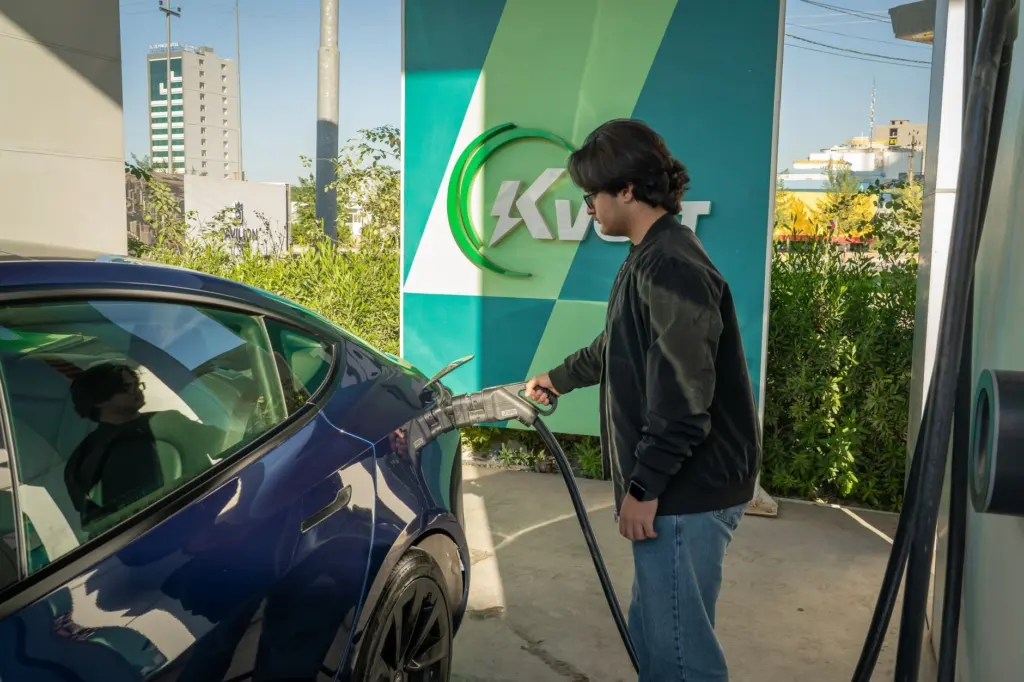
- Drive long routes: DC fast stations can charge an EV to 80% in as little as 20 minutes, according to ChargePoint, but station costs are passed on to drivers as higher charging fees. Using them as a top-up tool, not a daily habit, keeps costs down.
For a deeper look at timing by battery size and charger type, see How Long Does It Really Take To Charge An Electric Car? Practical Times, Examples, And Faster Charging Tips (2026) – Fixourfuel.
Cost: the charger, the installation and the fees
Level 2 costs split into hardware, installation and, away from home, charging fees. ChargeLab gives $300 to $1,000 per charger plus the cost of installation. Evolta Electric quotes the unit at typically between $600 and $1,200 and professional installation at usually between $500 and $1,500. The two sources use different ranges, so treat both as rough guides and ask an electrician for a written quote on your own property.
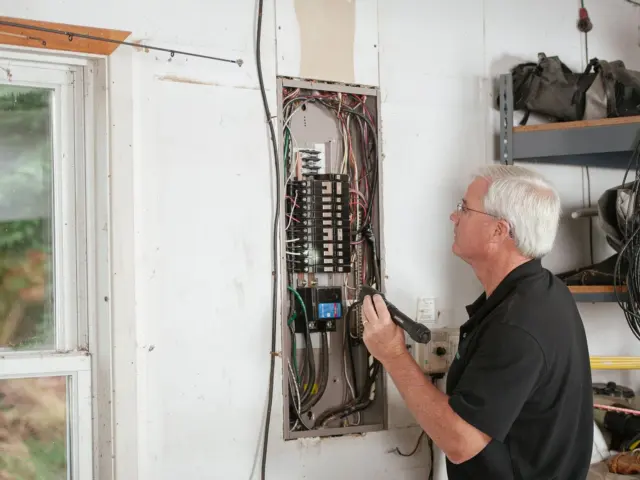
Installation is the line most likely to surprise you. Evolta notes that Level 2 needs a dedicated 240v circuit, which may involve upgrading your electrical panel or wiring. A home with spare panel capacity and a short cable run to the parking spot should sit toward the cheaper end. A home that needs new wiring or a panel upgrade should expect to land higher.
Away from home, the cost question is about fees. ChargePoint notes that the cost of DC fast stations is passed on to drivers as higher charging fees. That is a good reason to do routine charging on Level 2 where you can.
Where Level 2 chargers are used
At home
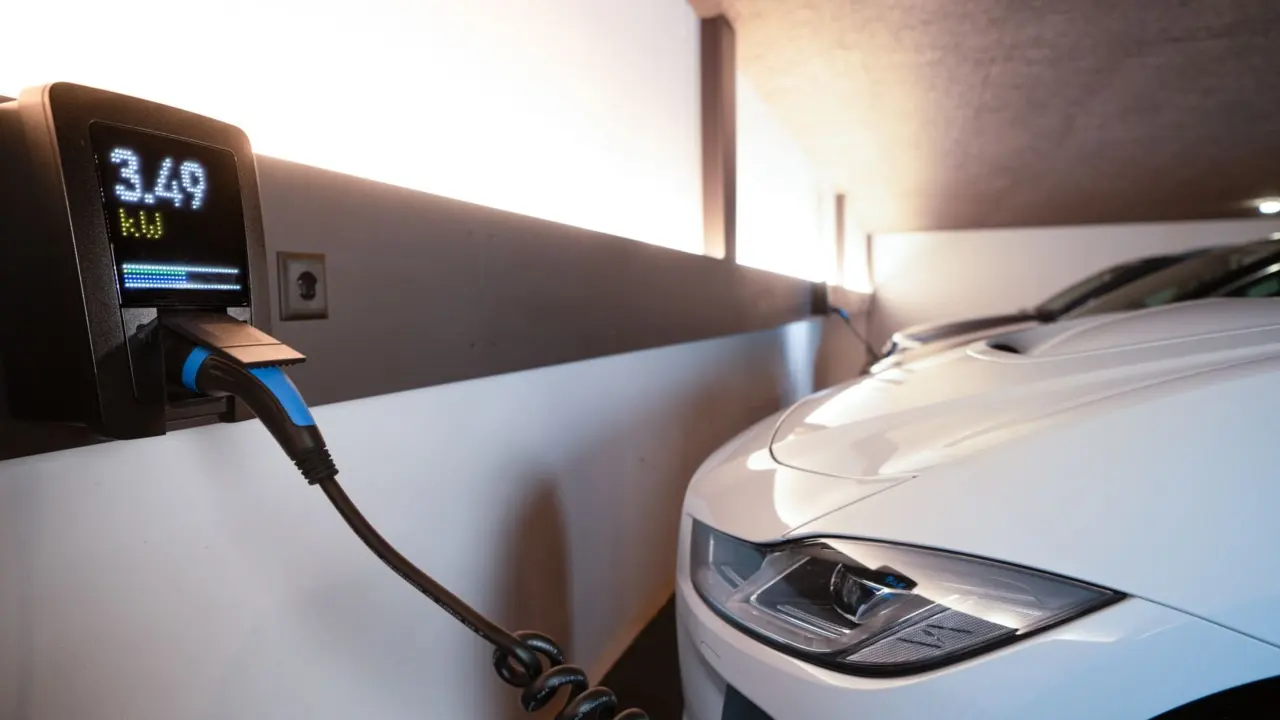
A garage or driveway charger is the most common way to use Level 2, because the car sits idle for hours. The dedicated 240v circuit is the main requirement. Some units can be set to a lower current to match the circuit: Blink says its Series 8 is configurable up to 80A max via a built-in derating switch. This suits households whose electrical capacity is uncertain and who want a unit they can adjust later.
Workplaces and shared parking
In shared parking, drivers arrive in different cars. Blink states that Level 2 chargers are compatible with nearly all EVs, so one type of unit can serve a mixed group of vehicles. Parked-for-the-day cars suit slower AC charging better than a fast charger that needs someone to move the car once it is done.
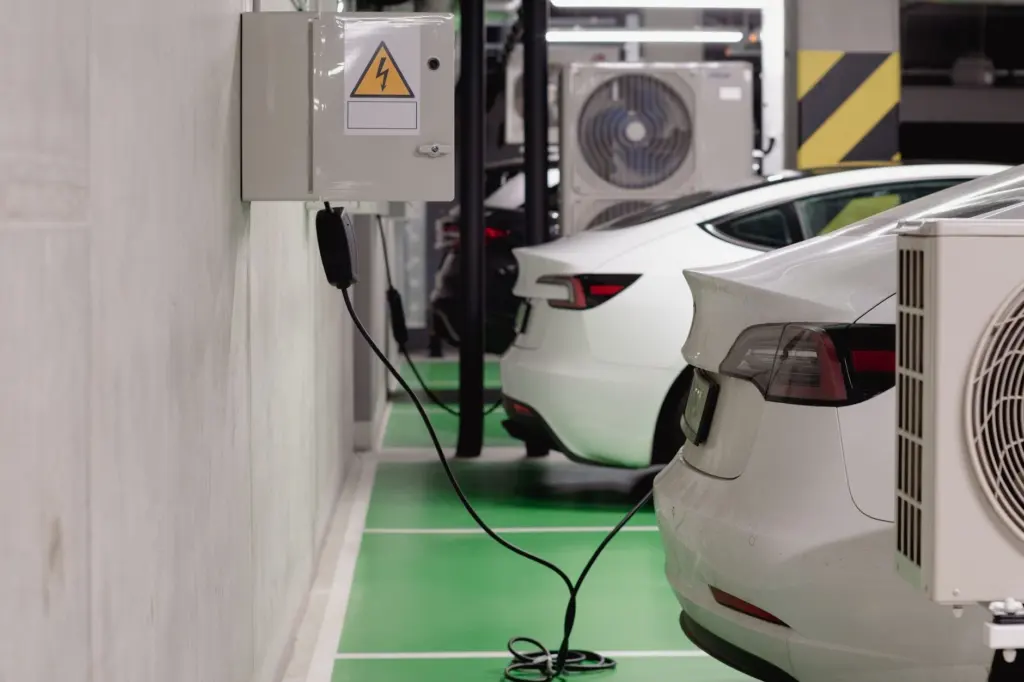
Public stations
Public Level 2 stations work for stops of an hour or more, such as errands, a meal or a long appointment, where range per hour adds up. For a quick stop on a long route, a DC fast station makes more sense, even at higher fees. For a stop of a few hours, Level 2 usually costs less than fast charging.
How Level 2 charging works
Level 2 delivers more power by using a higher voltage than Level 1. Level 1 requires only a 120-volt, 20-amp circuit, according to ChargePoint. Level 2 uses 240 volts. ChargePoint also gives the unit of speed: kW = volts × amps ÷ 1000, so a higher voltage or higher current both raise the charging rate.
ChargePoint says most EVs charge at about 7.2–19.2 kW on Level 2. Individual units vary widely. Legrand notes that some have a power output as low as 6.0kW at 24 amps and others as high as 19.5kW at 80 amps. The Blink Shasta 80 provides up to 80A and 19.2kW. Blink gives 10 to 60 miles of range per hour of charging as a typical Level 2 range, which is why one unit may add far more range than another.
A higher-rated unit is a ceiling, not a guaranteed speed. Battery size and vehicle type also influence charging speed, so check your car’s own rating before paying for the highest-power unit.
Connector and compatibility
The majority of passenger EVs have a built-in SAE J1772 charge port, also known as the J plug, according to ChargeLab. A Level 2 charger connects through that plug, and Blink says Level 2 chargers are compatible with nearly all EVs. Even so, confirm your car’s port type before buying.
Choosing a unit
- Start with the circuit: the unit’s amperage should fit the dedicated 240v circuit you have or can add. A higher-rated charger can be configured down if needed.
- Check the port: if your car has a J1772 port, a J1772 unit connects directly.
- Match speed to parking time: if the car is parked overnight, a lower-power unit can still fill the battery. Pay for more power only if your driving pattern needs it.
- Price the whole job: compare the unit price and the installation estimate together, since installation can be the larger line.
Frequently asked questions
How fast is a Level 2 charger compared with Level 1?
Legrand says Level 2 can charge an EV battery 6 to 8 times faster than a Level 1 charger, which usually adds 2 to 4 miles of range per hour. Level 2 range varies by charger and car, so check your own vehicle’s rate.
Do I need an electrician to install one?
Installation costs are quoted separately because a Level 2 charger needs a dedicated 240v circuit, and Evolta Electric notes that may involve upgrading your electrical panel or wiring. A professional installer can confirm what your home needs.
Will it work with my electric car?
Blink says Level 2 chargers are compatible with nearly all EVs, and ChargeLab notes most passenger EVs have a built-in J1772 port. Check your car’s port first.
Is Level 2 the same as fast charging?
No. DC fast charging is a separate, quicker category: ChargePoint says DC fast stations can charge an EV to 80% in as little as 20 minutes. Level 2 is slower and aimed at charging over several hours.